Do these phrases sound familiar to you?
“I never have enough money!”
“Money goes out faster than it comes in!”
“Money doesn’t grow on trees!”
How often have we heard these phrases growing up? Well, if you were like me, probably a lot. As a child, these were the  messages that I subconsciously learned about money, and they helped to develop my now adult relationship with it.
Just this week, I led a workshop on asking for money. As part of the icebreaker exercise, I asked attendees to share with me some of their greatest fears about fundraising. And, fear after fear centered around scarcity. In fact, many participants commented that they grew up hearing the very same phrases above.
Stop and think about what you believe about money. Are your beliefs limiting you in your work? Do you have a scarcity mindset?
Have you ever found yourself saying these types of things?
“There are only so many donors to go around!”
“Donors only have so much money to give!”
“We already asked our donors once this year; we can’t ask again!”
Are we placing our beliefs on our donors? Are we making assumptions for our donors? Are we self-sabotaging our work? Are we limiting our role in the work that we do? Are we focusing our efforts and time on things such as events that will take us out of the context of asking?
To be truly effective fundraisers, we all need to dig deep and look at our views and those beliefs of scarcity that may be holding you back. Are they self-limiting and if so how can you work to create an abundance mindset? We don’t want scarcity from preventing our life-changing work from happening both for our donors and for our missions. So, it is critical that you identify your mindset and work to change it. Major gifts start with you. Get that part of the relationship right first.
Break the scarcity mindset before you ask for a major gift.
 When I surmise this is the case, I often ask, “Have you asked your donors?” And, the response is “No, how do you ask them?”
 average of twenty cents per dollar raised to renew donors via direct mail? It costs about $1 to $1.25 to acquire a donor using that same method. That is five times more. And, on the converse, these new donors tend to give substantially less. It is much easier to upgrade an existing loyal donor to a higher level of giving.
 important to not only look at internal things that will impact your fundraising success i.e. Board of Directors, etc., but it is also critical to examine external factors as well. Some external things that may affect the success of fundraising include political factors (i.e. election time), economic (a down economy), sociocultural (changing demographics), and technology (changes in the web, social media, etc.). Development audits also tend to examine others in the industry including nonprofits serving the same type of causes, similar sizes, potential collaborators, and other market factors).
 se results to the board.
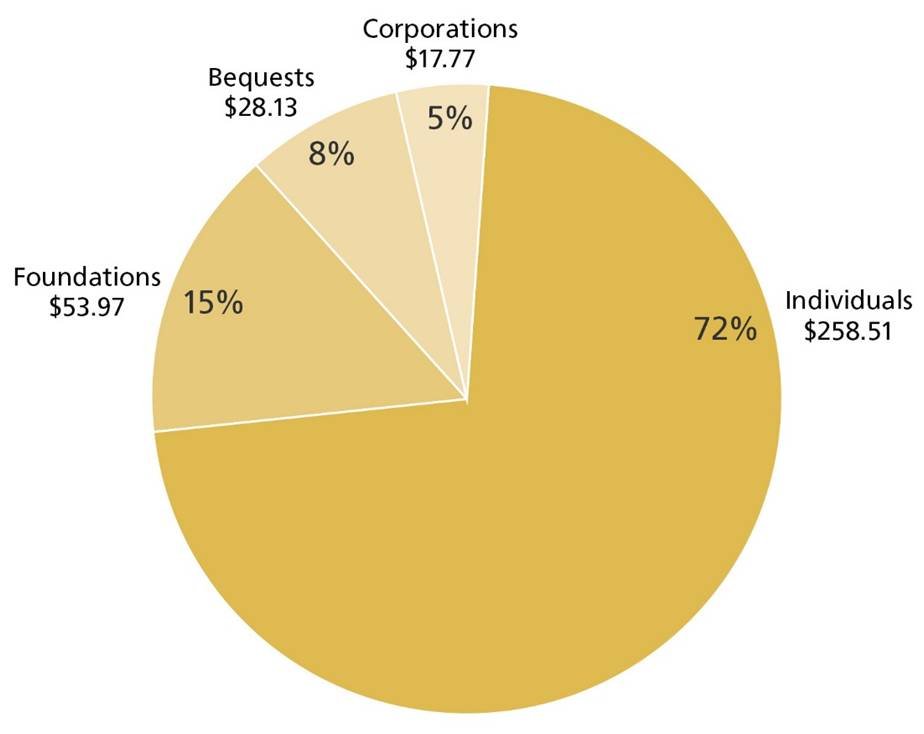 They fail to look at national giving trends that show individuals giving more than 70% of all contributed income and only 15% made by grants and foundations, with even less by corporations. It is these same organisations that continue


 Well, this group had a total of 700 names in their donor file. And, they were in serious trouble operating in crisis mode. Person after person told them that they should not invest in donor acquisition, but